
Featured
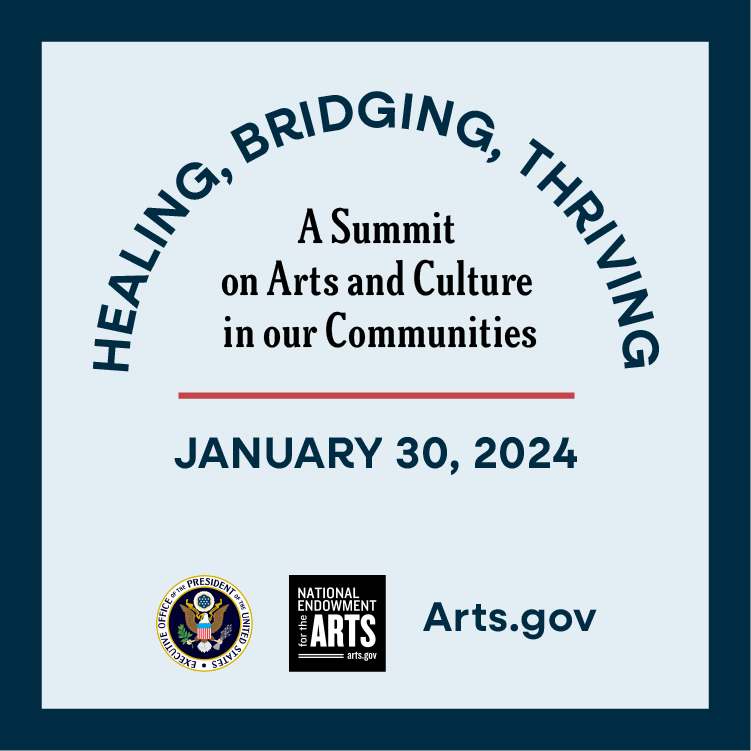
From the Executive Director: Notes on “Healing, Bridging, Thriving: A Summit on Arts and Culture in our Communities”
a2ru Executive Director Maryrose Flanigan shares her thoughts on the historic NEA/White House event
Blog; a2ru News, Creative Placemaking, Cross-disciplinary, Interdisciplinary
Upcoming Events
Arts Prescriptions on Campus: Offering Art on Prescription to Students in Higher Education
Moving With Screens and Machines: Imagining the Future of Embodied Technologies through Dance
2024 National Conference: “Generate | Integrate: Technology, the Arts and Design”
Tradition Innovations in Arts, Design, and Media Higher Education Releases Inaugural Issue on AI
This is the first of a three-part special issue on "Artificial Intelligence and Possible Futures for the Arts"
RIT Will Host Emerging Creatives 2024, “PLAY: The Impact of Play on How We Create and Relate to the World”
The annual student summit will take place March 14-17.
a2ru Ground Works Awarded Grant from the National Endowment for the Humanities
The grant will support the ongoing "Reco(r)ding CripTech" project
Featured Programs
All of a2ru’s interdisciplinary programs take an exploratory approach to develop new fields of research and foster the creativity that can transform our world.
Learn more about all of the great a2ru programs

Our online selection of exemplary arts-inclusive research projects and a platform for reflection on the processes that drive interdisciplinary collaborative work.
Creative Placemaking Resource Hub
Discover resources to excel in the practice of creative placemaking for our communities and higher education.

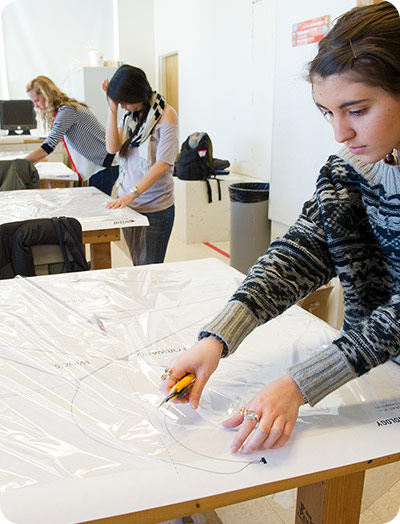
Member Spotlight

The University of Nevada, Las Vegas’s College of Fine Arts, a creative nexus anchored within the vibrant and diverse culture of Las Vegas, boldly launches visionaries who transform the global community through collaboration, scholarship, and innovation. Being a student of fine arts means heightening your physical, intellectual and cultural awareness. UNLV’s fine arts program prepares students for professional careers by helping them hone and perfect their talents. A wide array of campus venues, including theatres, performance halls, studios and an architectural library, are available to students as they pursue their passions. Our artist-in-residence program brings pre-eminent creators to UNLV. It also brings them into the classroom.
At UNLV we illuminate the power of the arts amidst breathtaking advancements in science and technology. In doing so, we are creating a global destination at the forefront of transforming arts and design. To accomplish this we encourage agency, inventiveness, problem-solving, and big-idea thinking in our students, faculty, and staff. We make education relevant through curriculum and effective learning outcomes. We are passionate and compassionate, principled and supportive, joyful and kind. We believe in inclusion, invention, transformation, engagement, and rigor. These vital principles underpin all our efforts and guide us in fulfilling our mission.
The UNLV College of Fine Arts includes the School of Architecture, School of Music, Department of Art, Department of Dance, Entertainment Engineering and Design, Department of Film, Department of Theatre, and UNLV Performing Arts Center.
The Arts at Virginia Tech
The arts at Virginia Tech are deeply embedded in teaching, research, and the student experience at Virginia Tech. Academic programs in the arts are found at the College of Liberal Arts and Human Sciences, the College of Architecture and Urban Studies, the School of Visual Arts, the School of Performing Arts, and the School of Architecture and Design. The Moss Arts Center operates as both a presenting organization and as a 147,000-square-foot, top-caliber arts center; it is a thriving community where the arts are a catalyst for engagement, inspiration, and discovery. Powered by advanced technology and networks of creative people, ICAT, the Institute for Creativity, Arts, and Technology, brings together and supports teams of faculty and students from across academic disciplines to address grand challenges and creative opportunities, ranging from large societal problems to industry-specific issues to the frontiers of artistic expression.

The Arts at Dartmouth
An interdisciplinary approach to the arts is pervasive at Dartmouth College; the Departments of Film & Media Studies, Studio Art, Theater, and Music collaborate with cross-campus partners like the Departments of Native and Indigenous Studies and Environmental Studies. The Hopkins Center for the Arts is home to a leading international arts presenting series as well as the Dartmouth Dance & Music Ensembles featuring student performers. The Hood Museum of Art and the Black Family Visual Arts Center are both part of a reenvisioned Arts District for the College. Students embrace interdisciplinary solutions to complex contemporary problems at the DALI (Digital Applied Learning and Innovation) Lab and the Arthur L. Irving Institute for Energy and Society.