
Your Degree in the Arts and Communication Is More Hireable Than You Think
Aug 4, 2026
Students (including myself) pursuing degrees in the arts, communication, or journalism have long faced some version of the same question: “But what are you going to do with that?” Parents worry. Guidance counselors hedge. Well-meaning relatives suggest a business minor just to be safe.
The data says they’ve been wrong.
A new analysis from LinkedIn, published exclusively in Forbes, ranked the 20 most common college majors on two factors: hireability and versatility, the ability to land work across multiple industries. Visual and Performing Arts graduates ranked second in versatility, with 68% finding employment outside their field’s primary industries. Communication and Journalism graduates ranked third at 67%. Our disciplines claim two of the top three spots on LinkedIn’s versatility index.
In a labor market where overall hiring is down 20% from pre-pandemic levels and AI is reshaping entire industries, the ability to move between fields is not a soft benefit. It is a survival skill. LinkedIn’s Head of Economics put it plainly: communication skills are “an essential skill for so many jobs that a lot of folks do not have.” When AI automates routine tasks, the capacities that remain irreplaceable are exactly what we teach: storytelling, critical analysis, visual literacy, persuasion, and the ability to connect with an audience.
University of Memphis, CCFA graduates go into media and entertainment, yes, but also into healthcare, financial services, nonprofits, government, and technology. They are brand managers, creative directors, content strategists, communications officers, and community leaders. What makes their degrees valuable is not that they trained for one specific job. It is that they learned to think, create, and adapt, and to back it up with a portfolio of tangible work. The question is not whether an arts or communication degree is practical. The data has answered that. The question now is whether we will update our assumptions to match the reality our graduates are already living.
At the University of Memphis College of Communication and Fine Arts, we have always known that creativity is a competitive advantage. It turns out the labor market is catching up. – I received the following comment (most responses were extremely positive): I would say that versatility and hireability are different metrics. Versatility data doesn’t inherently prove these degrees are especially hireable. If over 2/3’s of Communication and Journalism graduates are working outside their field’s primary industries, that could suggest that the degree produces limited opportunities within their respective industries. – I am trying to decide whether or not to respond. I think the poster is misinterpreting that 2/3 of comm/fine arts being more versatile mean they are not going in their field.
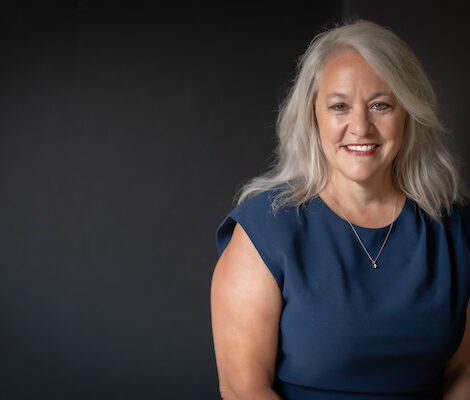
Dr. Debra Burns is the Dean of the College of Communication and Fine Arts at the University of Memphis. She is a renowned expert in music-based intervention research, focusing on mixed methodologies across the cancer treatment continuum, from disease-directed treatment and survivorship to end-of-life care. Her extensive work includes collaboration and consultation on several National Institutes of Health-funded studies, where she specializes in research methodology, identifying essential components of music interventions, designing appropriate control conditions, and monitoring treatment fidelity. Dr. Burns holds a Ph.D. in music education and music therapy from the University of Kansas, a master’s degree in music therapy from Illinois State University, and a Bachelor of Arts in music education from Glenville State College in West Virginia. She completed five years of postdoctoral training funded by the Walther Cancer Institute and the National Institutes of Health/National Center for Complementary and Alternative Medicine.